CoCreate
Product Learning at
the speed of AI
Scaling real-world insight to match the speed
of product development.
Role
Founder • Product Designer
Scope
Defined and explored an AI-powered product learning system across product strategy, system design, and engineering
work
Explored how AI can enable fast, decision-oriented product learning by combining scale with conversational depth
IMPACT
Developed and tested a system concept, led engineering, and evaluated market viability in a rapidly evolving AI landscape
Product development accelerated with AI,
product learning had not
$3 Billion
user research & insights market
User research and insights market
AI has rapidly reduced the cost of generating and analyzing user input, yet the way teams gather feedback has remained largely unchanged.
Google + Meta
observation
Product teams consistently had critical questions, but no quick way to answer them
Big tech looked for ways to replace traditional research systems with AI powered solutions
Product learning is ready to operate at the speed of decisions
product
AI User Research Assistant
Cocreate democratizes and accelerates product insights at scale
Product learning shifts from collecting feedback to generating answers fast enough to influence decisions.
01
product question
Teams define what they need to learn
02
ADAPTIVE FEEDBACK
AI-driven conversations gather real user input
03
STRUCTRED INSIGHT
Responses are organized into usable signals
04
PRODUCT DECISION
Teams act on clear, evidence-based direction
USER JOURNEY
Mobile Experience Deep Dive

I want to understand how the onboarding flow is working for users
Sarah, Product manager
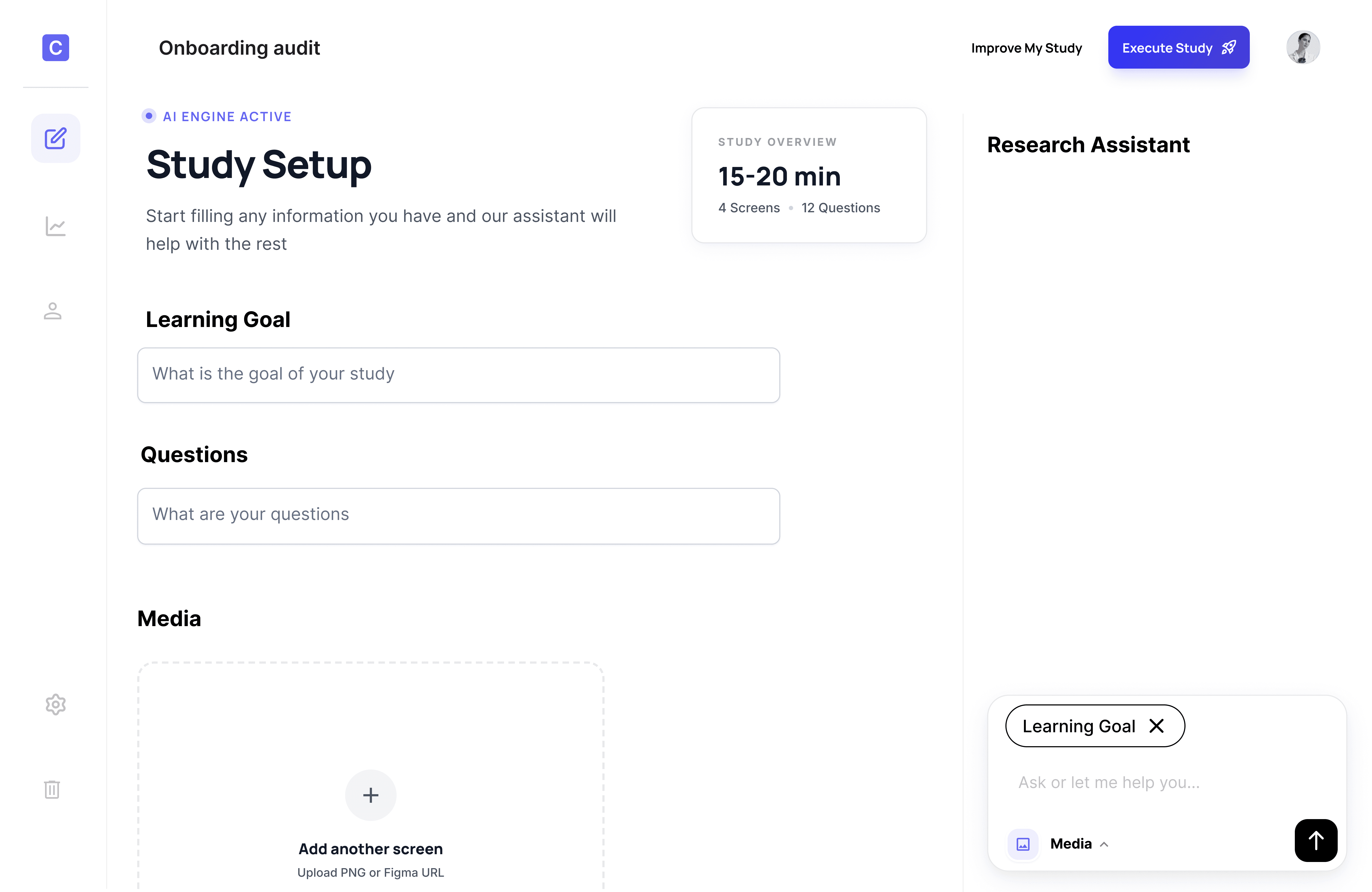
01
Low-lift study creation
Collapse the effort required to go from idea to executable study.
Conduct bespoke user research studies without being a UXR expert
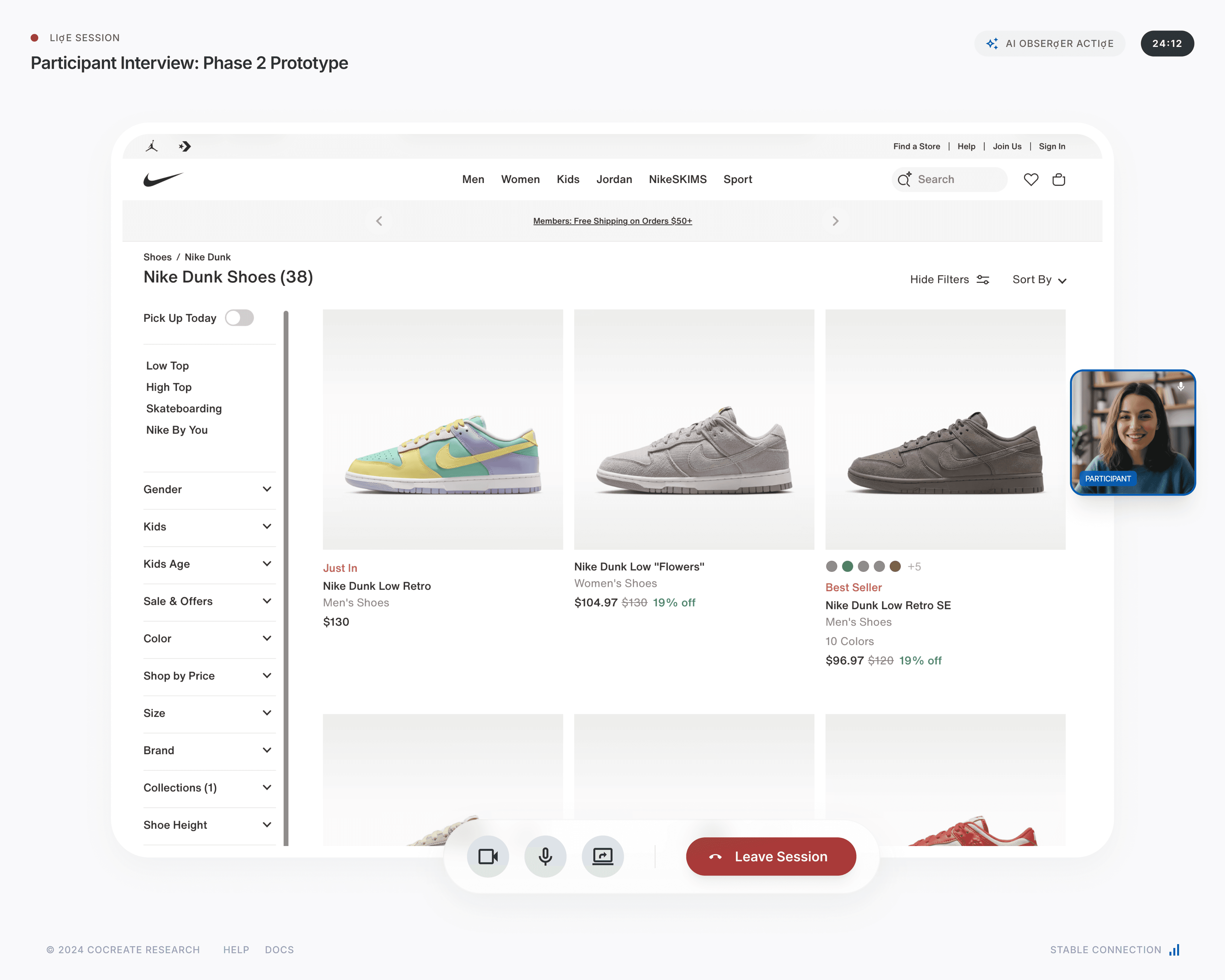
02
Adaptive AI Interviewing
AI-driven interviews adapt in real time, probing deeper without moderation
Produces richer, more relevant data without requiring expert moderation
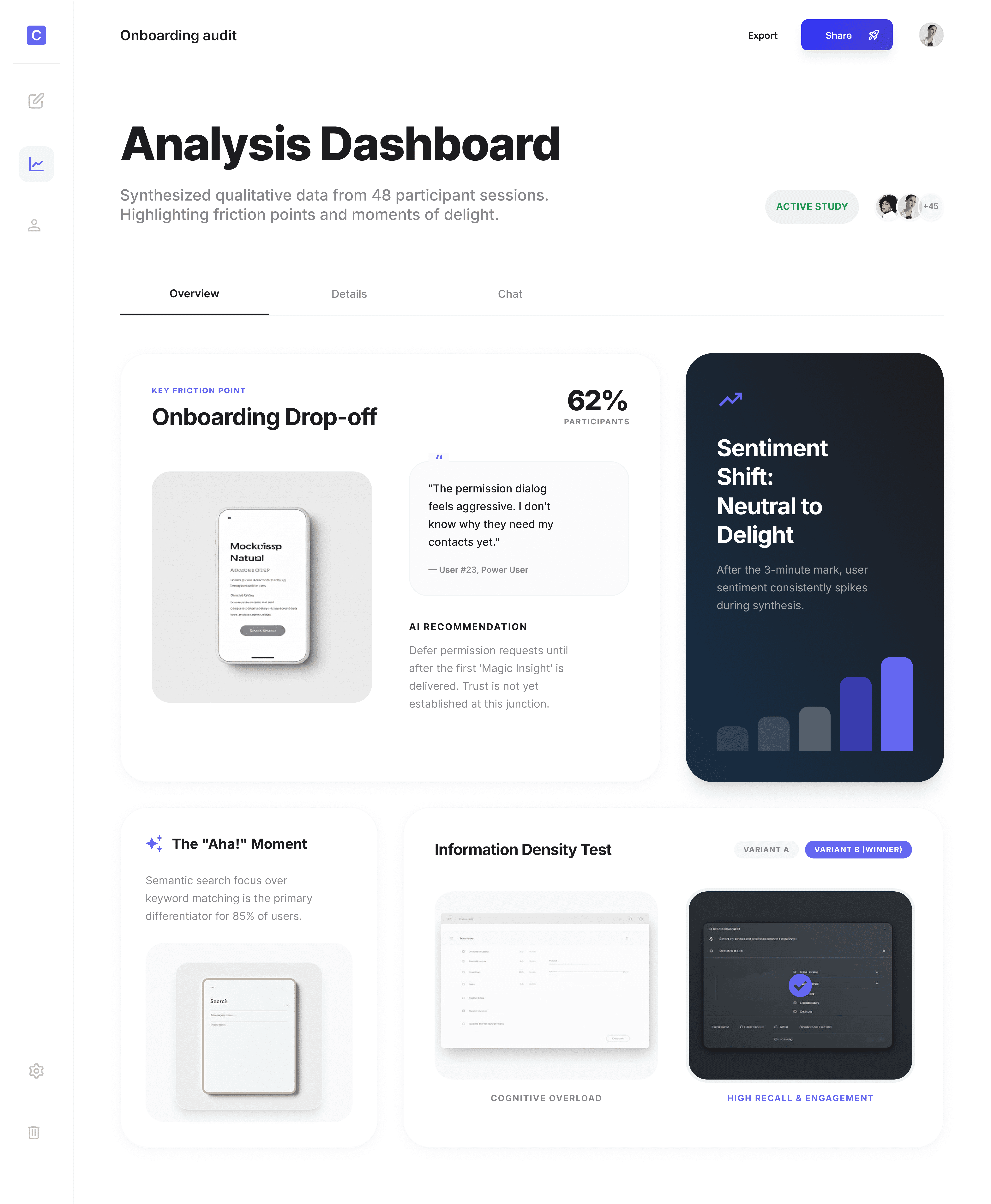
03
Analysis made easy
Key insights and trends are generated across studies
Quickly gain a birds-eye view on the research findings
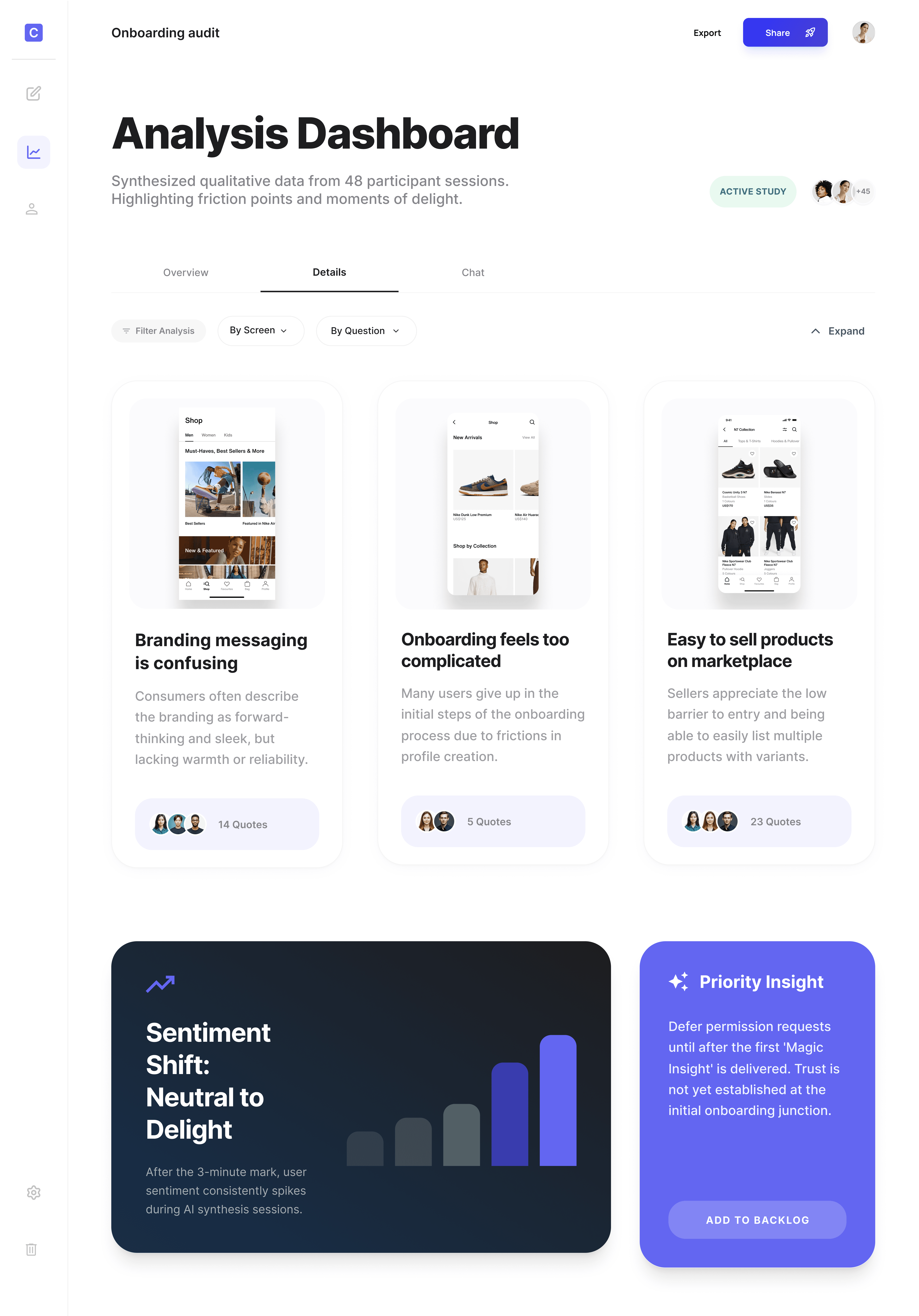
04
Actionable insights
Feedback is translated into signals for what is working, what is not, and what to do next.
Learn by screen or by question what users had to say.
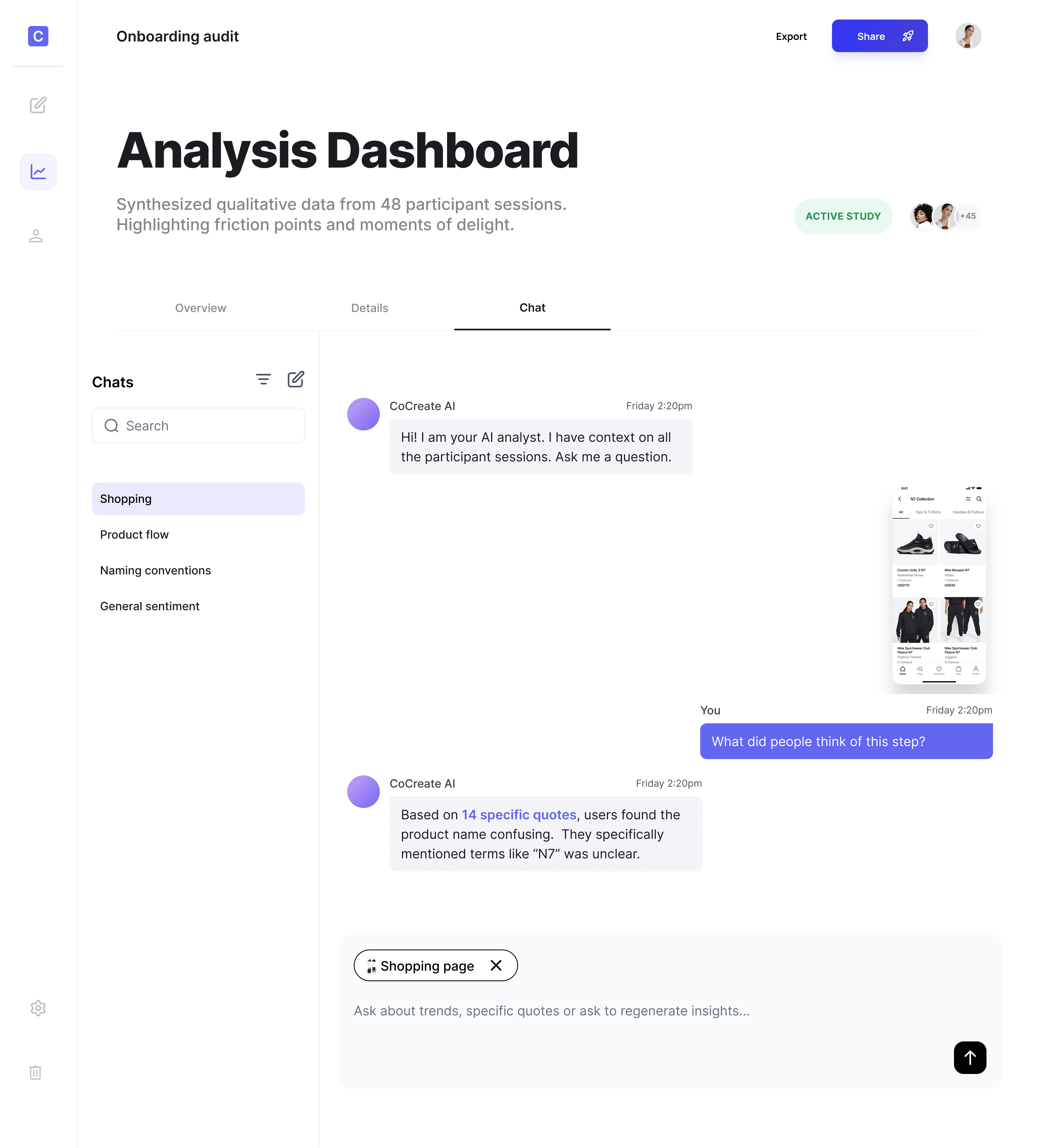
05
Adaptive chat
Save hours on analysis in answering your research questions
AI agent adapts to do the searching so you don't have to
OUTCOME
Operating as a product and
business owner
Beyond designing solutions, I owned the product, technical and market decisions defining what should exist and why.
Funding
Incubation & funding
leadership
Building a Team
Strategy
Navigating Ambiguity
Execution
Operating at AI Speed
Market
Competing at Scale
Product
Capabiliy Inflection
Context
CoCreate was incubated through Carnegie Mellon at the intersection of human-computer interaction and large language models. That academic foundation meant every assumption, including whether to raise, had to be tested and could not assumed.
Outcome
Choosing to self-fund was a deliberate bet on strategic control. In a category shifting monthly, owning the roadmap compounded faster than outside capital could.
Learnings
From big tech certainty to founder clarity,
01
I stepped away from the structure of big tech to test a belief: that adaptive AI interviewing could extend the reach of user research and re-center it in product development.
I designed a system to explore how qualitative insight could scale without sacrificing depth or essential human judgment.
02
Through building and pressure-testing the concept, I uncovered what actually makes AI-assisted research viable in practice:
Users need to trust AI-led conversations, insights must arrive in time to shape decisions, and humans must remain clearly in control of interpretation.
03
What began as a belief became a self-funded product exploration and a shift in how I operate. I learned that the hardest part is not technical execution, but knowing when to trust your own conviction before the market catches up.