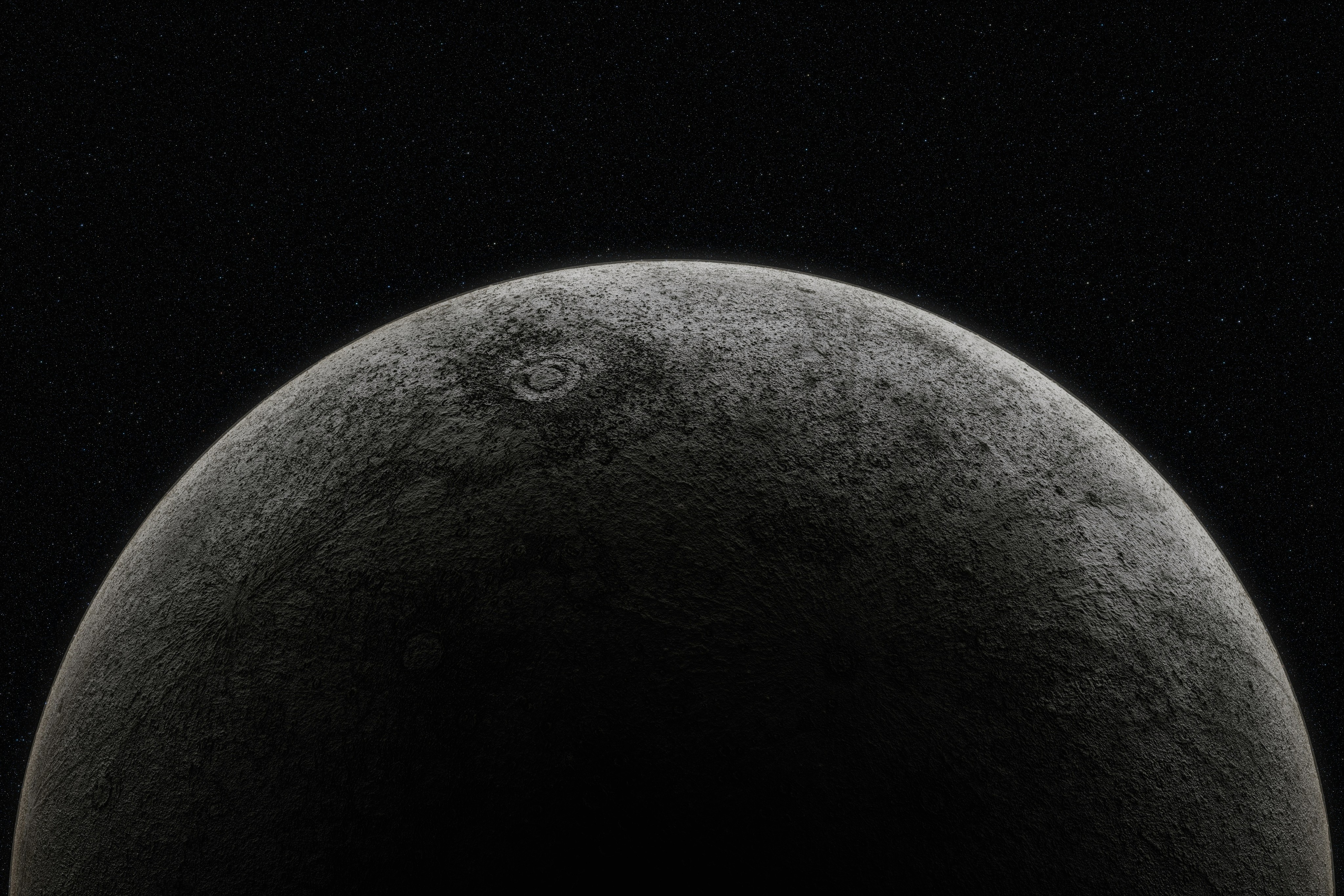
Mission Control for Lunar Rover
Designed imaging and data capture systems that enabled
real-time mission decisions under extreme uncertainty.
Role
Product Design Lead • Imaging & Data Capture
Scope
Terrain visualization • Scientific Capture • Cross-system Alignment
work
Designed imaging workflows as part of a unified mission decision system
IMPACT
Enabled real-time decision-making for first compact private lunar rover mission
The Challenge
Mission decisions had to be made with low quality data with no second chances
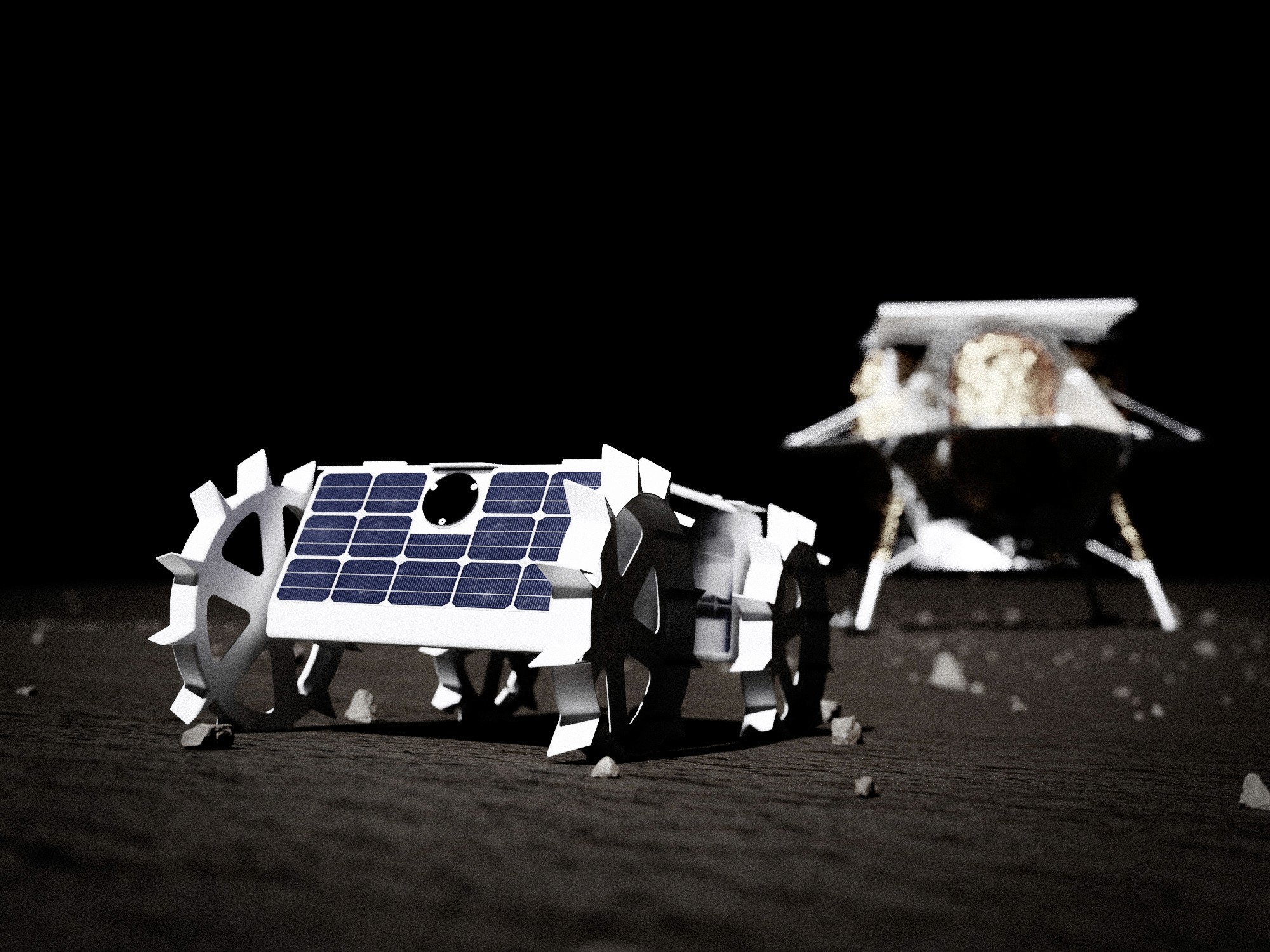
CubeRover had to prove that smaller, lower-cost lunar rovers could safely navigate the moon and capture meaningful scientific data.
Early systems were fragmented and exposed large volumes of terrain imagery and telemetry, overwhelming operators.
Operators didn’t need more data, they needed clear decisions
system design
Mission decision system
Mission decisions has to be made with low quality data with no second chances
The platform unified terrain analysis, navigation planning, and scientific capture into a single operational workflow. My work focused on image capture and annotation for fast and high confidence decisions.
01
terrain imagery + rOver telemetry
02
terrain risk analysis
03
navigation planning
04
image capture & annotation
05
mission decisions
Interface Study
Mobile Experience Deep Dive
Analyze terrain imagery and rover telemetry
Evaluate navigation risk
Capture and annotate scientific observation
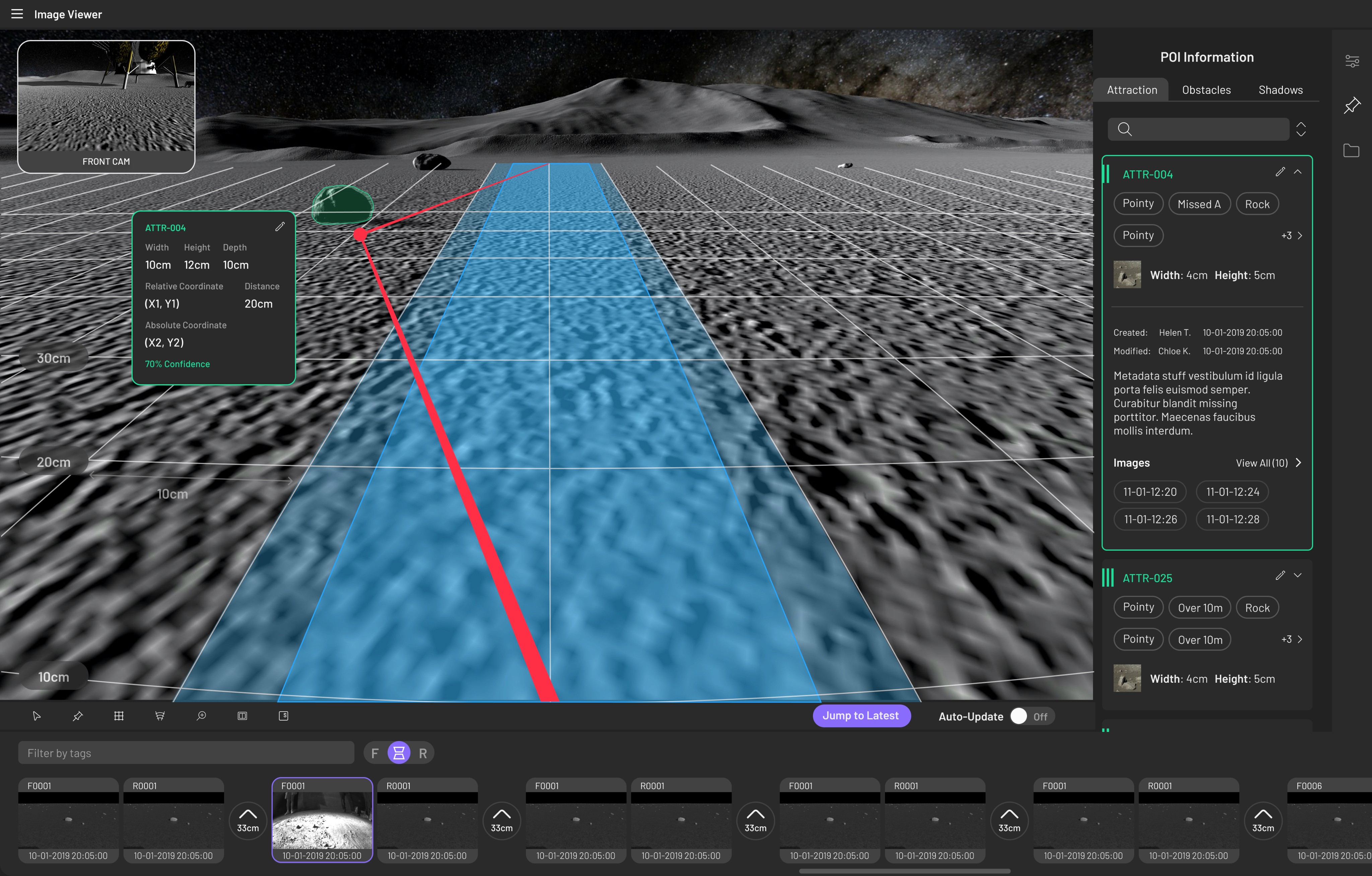
Terrain visualization to identify safe traversal paths
The desktop dashboard emphasizes a wide-format immersive feed.
We redesigned the discovery engine to highlight professional
attribution without interrupting the visual flow.
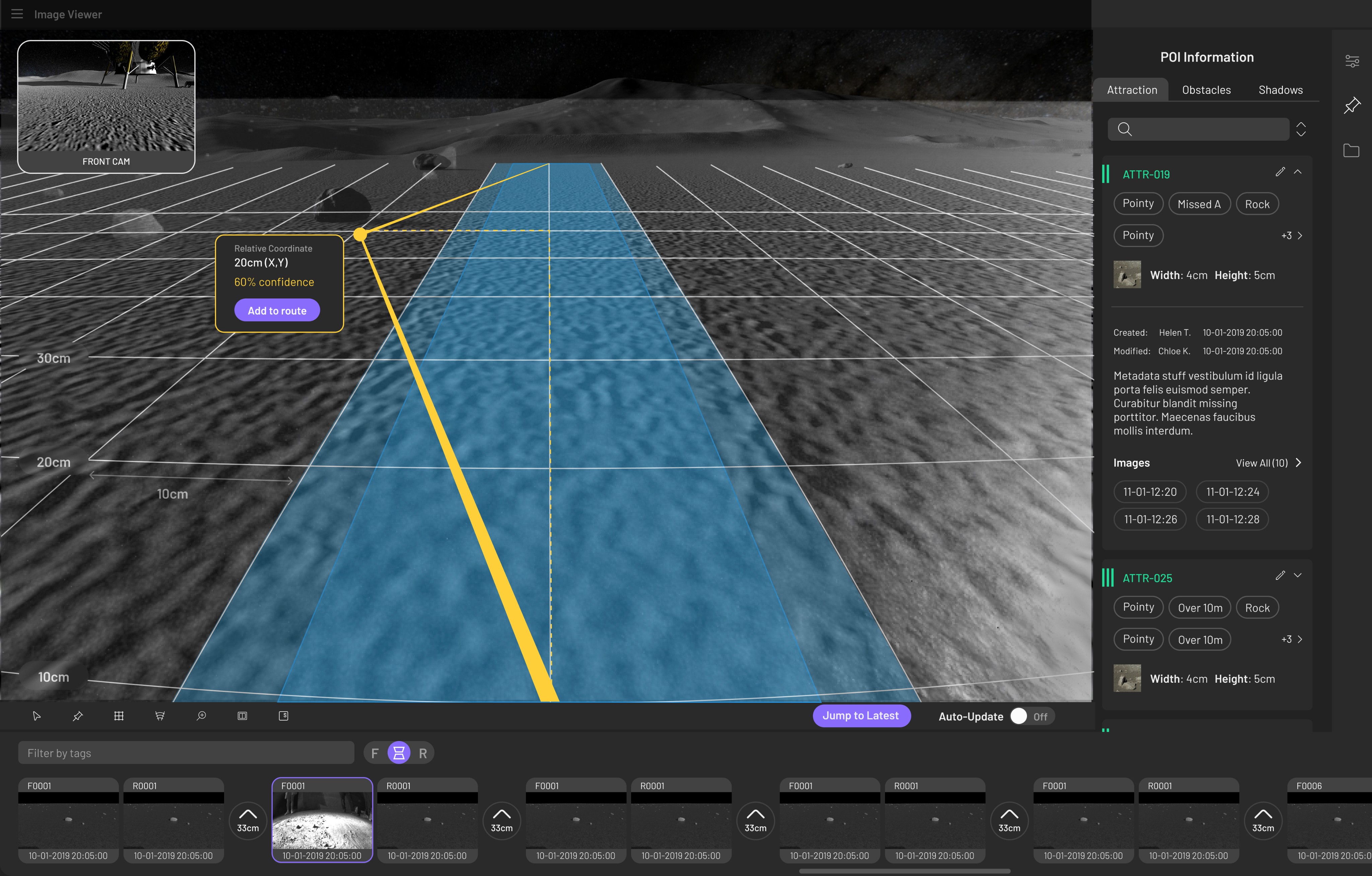
Second terrain visualization
Led designed of confidence indicators that surfaced terrain safety without requiring operators to interpret raw telemetry.
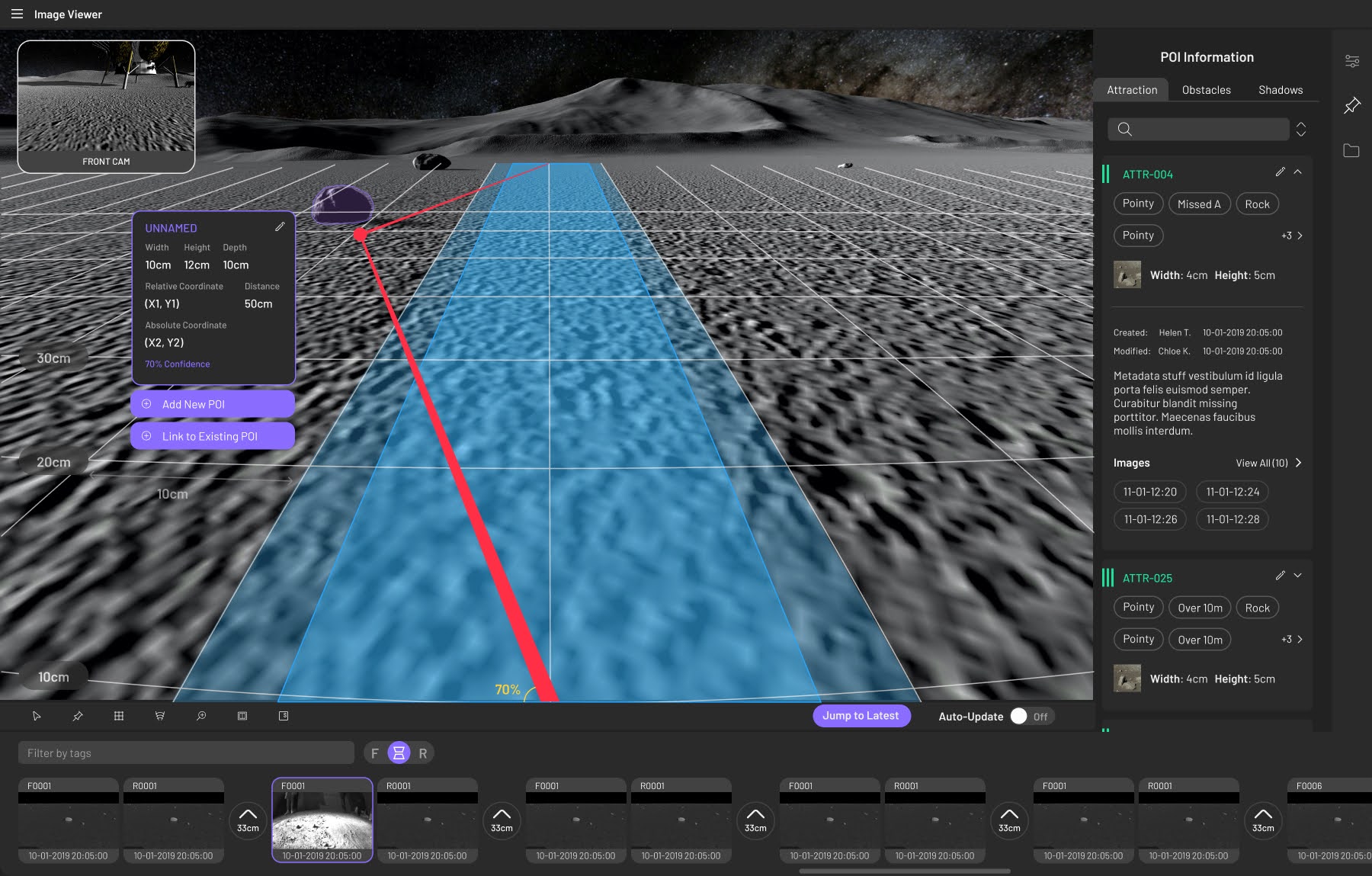
Integrated data capture during navigation
Drove designs for the capture workflows embedded in navigation so operators could document observations without interrupting decisions.
Structured data capture
Designed structured capture tools that ensured consistent scientific data while reducing operator cognitive load.
CROSS-SYSTEM ALIGNMENT
Reducing mission risk through system design
Mission simulations revealed the most critical failure modes.
Prioritization focused on reducing navigation uncertainty and preserving scientific data integrity. This meant prioritizing decision clarity over feature breadth.
Add POI
Add tag
POI Management Home Screen
Organize Content
Search
View IMG Properties
By POI Name
By Types
By Time
Importance
(optional)
By Tags
View POI Cards
Edit POI card
& content
Manage
POI Tags
Add
Edit
Delete
Sort
If IMG Selected
If POI Selectted
TAG Management Home Screen
TAG Directory
When Select a Tag
Edit Tags
Delete Tags
Add New Tag
View Tag Properties
OUTCOME
Successfully navigated the moon
The system was used to navigate a rover on the lunar surface during a live mission.
It clarified mission workflows, surfaced risk earlier, and enabled reliable scientific capture during navigation.

OUTCOME
Opening access to
lunar exploration
CubeRover demonstrated that smaller, lower-cost spacial missions could successfully navigate and collect scientific data. This validated a new path for broader participation in space exploration.